


Things to Understand Before Filing a Patent in India
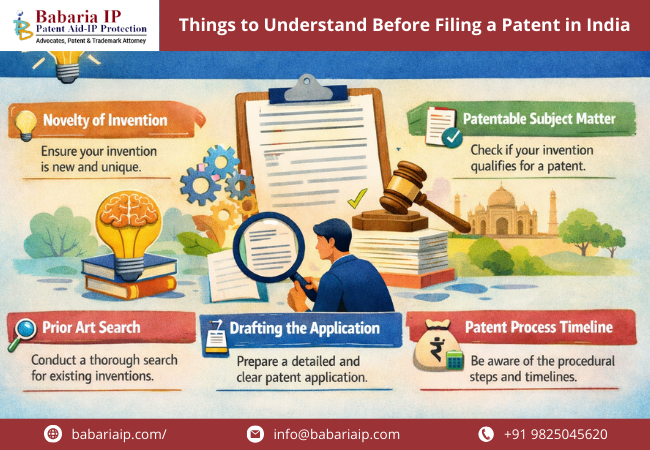
Filing a patent in India is often spoken about like it is a checklist. Fill this form, submit that document, and wait for approval. In reality, it rarely feels that clean when you are the one involved. Most inventors reach this stage after months or years of working on something that did not exist before. When they start searching for patent services India, it is usually because they sense that a wrong move here could undo a lot of effort.
We will discuss things you need to understand before filing a patent in India in this article.
What a Patent Really Covers
One of the most common misunderstandings is thinking that a patent protects an idea. It does not. A patent protects a specific technical solution to a problem. The difference sounds small, but it changes everything. An invention must be new, it must not be obvious to someone skilled in that field, and it must be capable of being made or used. If one of these elements is missing, the application will struggle no matter how exciting the concept feels. In India, this becomes even more important because the law clearly excludes certain categories.
Business methods, mathematical models, algorithms on their own, and methods of medical treatment are not patentable. Software-related inventions often fail because they are explained as features or results instead of technical improvements. Many applications are rejected not because the invention is weak, but because it was described in the wrong way.
Novelty and Early Disclosure
Novelty is fragile. Once it is gone, it cannot be repaired. Anything that becomes publicly available before filing can destroy novelty. This includes presentations, research papers, blog posts, demo videos, investor decks, and even casual online discussions. Inventors often share details without realising they are creating prior art against themselves. This is why prior art searches matter. They are not just about checking whether something exists. They help you understand how close your invention is to what is already known.
Provisional and Complete Applications
Many inventors file a provisional application thinking it buys time without consequences. That is only partly true. A provisional application secures a priority date, but it still needs to describe the invention properly. If it is vague or incomplete, it will not support strong claims later. The complete specification must be filed within twelve months, and it cannot introduce entirely new subject matter.
This is where many applications collapse. The provisional is drafted casually, and the complete version tries to cover more than what was originally disclosed. The result is objections that cannot be fixed.
Drafting the Specification
The specification is the backbone of the patent. It explains how the invention works, how it is implemented, and what makes it different. It also defines the boundaries of protection through claims. Poor drafting creates long-term problems. Claims that are too broad attract objections. Claims that are too narrow reduce the value of the patent. Descriptions that lack detail make enforcement difficult later.
This stage requires patience. Every feature described should support a possible claim. Every claim should be supported by the description. Once filed, there is very limited scope to fix foundational weaknesses.
Timing and Filing Decisions
Timing is not just about filing early. Filing too early can lock you into an unfinished version of the invention. Filing too late can cost you novelty. There is no universal rule here. Some inventions benefit from early filing because competitors move fast. Others need refinement before they can be described properly. The right moment depends on the development stage, funding, and commercial plans. For applicants thinking about international protection, timing becomes even more critical.
Examination and Objections
After filing, many applicants assume the process will move forward on its own. It does not. A request for examination must be filed, after which the patent office reviews the application. Objections are common. They can relate to novelty, inventive step, clarity, or exclusions under the law.
Objections are not a rejection. They are an invitation to explain. How you respond matters more than the objection itself. Generic or rushed replies often make things worse. Deadlines are strict, and missing one can lead to abandonment without warning.
Conclusion
Filing a patent in India is not something that works well when rushed or treated like a formality. Every decision, from when you file to how you describe the invention, stays with the application for years. Small gaps in understanding often turn into long delays later. A patent is only useful when it actually protects what matters, not just when it gets granted. Taking time to understand the process, planning the filing properly, and staying involved after submission usually makes the difference. In the long run, patience and clarity protect an invention far better than speed ever does.
 Categories :
Patent attorneys in India
Categories :
Patent attorneys in India  Tags :
How to file a patent in India , Indian patent process , intellectual property rights India , Patent application drafting , Patent examination India , Patent filing in India , patent law India , patent services India , Patent specification drafting , Provisional patent application India
Tags :
How to file a patent in India , Indian patent process , intellectual property rights India , Patent application drafting , Patent examination India , Patent filing in India , patent law India , patent services India , Patent specification drafting , Provisional patent application India
.png)